
How to Protect Muscle While Losing Weight on a GLP-1 Medication
Written by Evergreen Editorial, Evergreen Telehealth
Medically reviewed by Dr. Casey Greene, PharmD, IFMCP, Peptide Subject Matter Expert, Evergreen Telehealth
Published Updated
Why Losing Weight Can Mean Losing Muscle, Too
For the broader treatment overview, see our Complete Guide to GLP-1 Weight Loss Treatment →
When you lose weight quickly — whether through a GLP-1 medication, calorie restriction, or both — your body doesn't only burn fat. Research on rapid weight loss consistently shows that a meaningful portion of what's lost can be lean muscle mass, especially if protein intake and resistance exercise aren't part of the picture. Some studies suggest that without deliberate intervention, as much as 45% of total weight lost during aggressive calorie deficits can come from lean tissue rather than fat, with the average around 25%.
This matters for more than appearance. Muscle is metabolically active tissue — it's part of what keeps your resting metabolism running efficiently, supports strength and mobility as you age, and helps you maintain your results once you reach a maintenance dose or stop treatment altogether. Losing muscle alongside fat can leave you lighter on the scale but not necessarily healthier or better equipped to keep the weight off long-term.
GLP-1 medications add a specific wrinkle here: because they suppress appetite so effectively, it's easy to under-eat overall — and protein is often the first thing to fall short when your appetite is down and meals feel harder to finish.
Priority One: Protein at Every Meal
Protein is the single most important nutritional lever for preserving muscle during weight loss. It supplies the building blocks (amino acids) your body needs to repair and maintain muscle tissue, and it also happens to be the most satiating macronutrient — helpful when appetite is already reduced by medication.
While individual needs vary and should be discussed with your provider, general guidance for people in an active weight-loss phase leans toward prioritizing protein at every meal rather than treating it as an afterthought. Most research in people actively losing weight supports a target of at least 1 gram of protein per pound of body weight per day — and potentially more. Spreading that across meals of 30 grams or more of protein each helps your body actually use it for muscle repair rather than energy.1 Good sources include:
- Lean meats, poultry, and fish
- Eggs and dairy (Greek yogurt, cottage cheese, cheese)
- Plant-based options like tofu, tempeh, edamame, and legumes
- Protein shakes or bars, if whole-food sources feel difficult to finish
If appetite is significantly reduced, some patients find it easier to get enough protein through smaller, more frequent meals rather than three large ones, or by front-loading protein earlier in the day when appetite tends to be higher.
Priority Two: Resistance Training
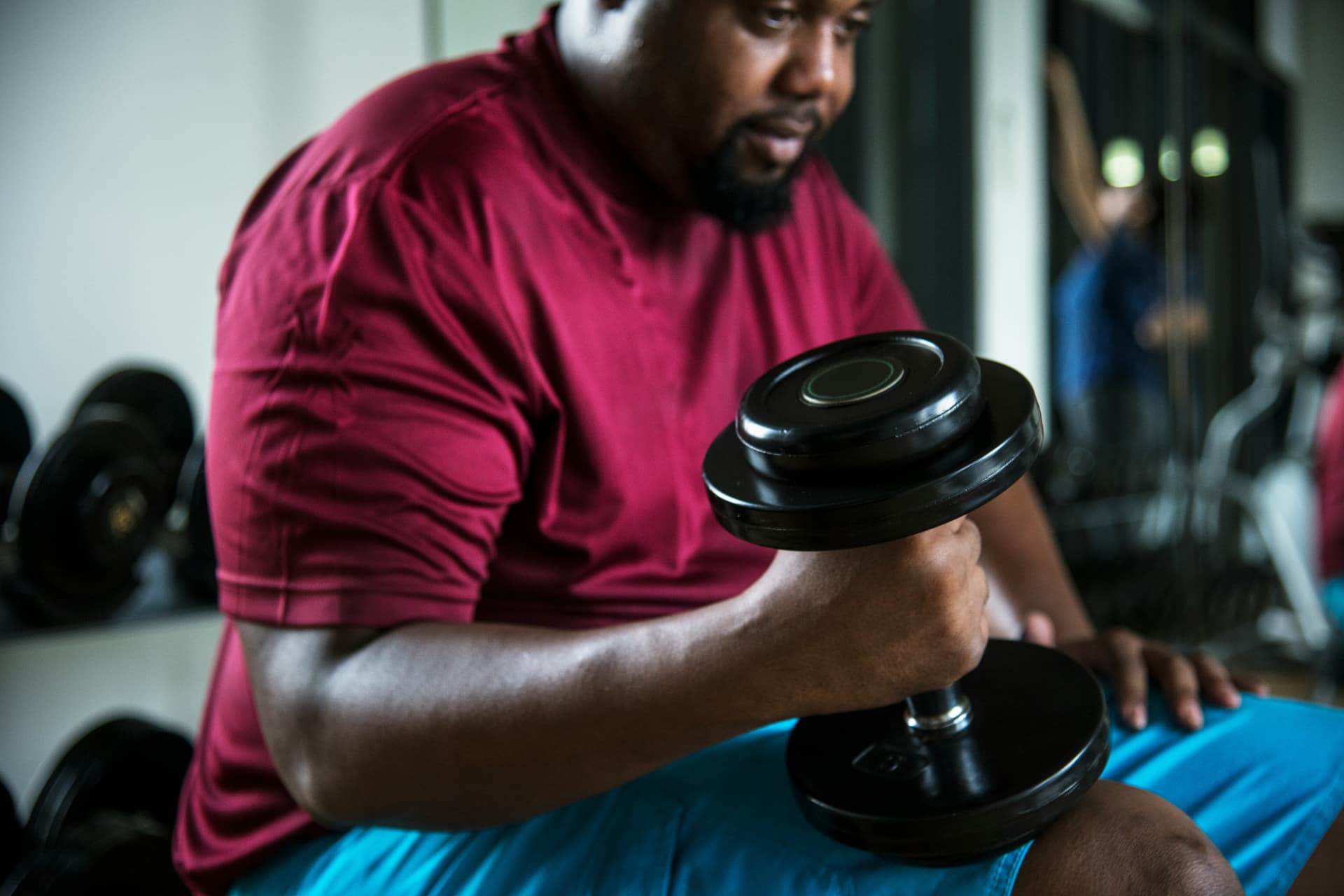
Resistance training is the second essential pillar, and arguably the most under-used one. Diet alone can slow muscle loss, but your muscles need a reason to hold onto themselves — and mechanical tension from strength training is that signal.
Research consistently shows that combining a calorie deficit with resistance exercise preserves substantially more lean mass than diet changes alone. It doesn't need to be extensive: most guidance suggests two to three sessions per week focused on major muscle groups (legs, back, chest, shoulders) is enough to make a meaningful difference for most people. If you're new to strength training, bodyweight exercises, resistance bands, or a basic dumbbell routine are all reasonable starting points — the goal is consistency, not intensity.
Want more detail on building an exercise routine around treatment? Read our Exercise Recommendations section in the Complete GLP-1 Guide →
Priority Three: Sleep and Recovery
Sleep is an easy factor to overlook, but it plays a direct role in muscle preservation. Poor sleep is associated with reduced insulin sensitivity, increased cortisol (a hormone that promotes muscle breakdown when chronically elevated), and reduced motivation for both exercise and nutritious eating. Most adults need 7–9 hours of consistent sleep to support recovery, especially during a period of active weight loss and increased physical activity.
Recovery matters on the same timeline as your resistance training — muscle isn't built or preserved during the workout itself, but during the rest and repair that follows it. Spacing out training sessions to allow 48 hours of recovery for a given muscle group is a reasonable default for most people.
Priority Four: Hydration
GLP-1 medications slow digestion, which can make it easier to become mildly dehydrated without noticing — especially if nausea or reduced appetite also means you're drinking less overall. Dehydration can worsen constipation and fatigue, and it can also impair exercise performance and recovery, indirectly working against your muscle-preservation efforts. A reasonable daily target is close to half your body weight in ounces of water, adjusted for activity level and your provider's guidance.
Supporting Nutrients Worth Knowing About
Beyond the core pillars of protein, training, sleep, and hydration, a few specific nutrients have research behind a supportive — not primary — role in muscle preservation during weight loss:
- Creatine is among the most well-studied supplements for supporting muscle mass and strength, particularly when paired with resistance training.
- Leucine, an amino acid found in high-protein foods, plays an outsized role in triggering muscle protein synthesis compared to other amino acids. This is the #1 muscle-growth triggering amino acid (activates mTOR), but we largely get it through the protein in our diets, or via supplementation with protein or amino acid shakes.
- Glycine, an amino acid involved in collagen and protein synthesis, has also been studied for a supporting role in muscle preservation and metabolic health during periods of calorie restriction. Read more about glycine on our blog →
These are worth discussing with your provider if you're interested in a more targeted approach, but none of them substitute for adequate total protein intake and consistent resistance training — those two fundamentals do the majority of the work.
Signs You May Need to Adjust Your Approach
Talk to your provider if you notice unusual weakness, a significant and rapid drop in strength during workouts you were previously managing fine, or weight loss that feels faster than expected given your intake. These can be signs that muscle loss is outpacing fat loss, and your nutrition or exercise plan may need adjustment.
Protect Your Progress From Day One
Muscle preservation works best when it's part of your plan from week one, not something you address after the fact. Evergreen Lean's providers can help you build a realistic nutrition and training approach alongside your prescription.
See if Evergreen Lean Is Right for You →
Frequently Asked Questions
References
Total protein target during weight loss (≥1g/lb or ~2.2g/kg+) and per-meal protein threshold (~30–40g to maximize muscle protein synthesis):
- Helms ER, Zinn C, Rowlands DS, Brown SR. A systematic review of dietary protein during caloric restriction in resistance trained lean athletes: a case for higher intakes. Int J Sport Nutr Exerc Metab. 2014;24(2):127-138. doi:10.1123/ijsnem.2013-0054
- Morton RW, Murphy KT, McKellar SR, et al. A systematic review, meta-analysis and meta-regression of the effect of protein supplementation on resistance training-induced gains in muscle mass and strength in healthy adults. Br J Sports Med. 2018;52(6):376-384. doi:10.1136/bjsports-2017-097608
- Stokes T, Hector AJ, Morton RW, McGlory C, Phillips SM. Recent perspectives regarding the role of dietary protein for the promotion of muscle hypertrophy with resistance exercise training. Nutrients. 2018;10(2):180. doi:10.3390/nu10020180
- Areta JL, Burke LM, Ross ML, et al. Timing and distribution of protein ingestion during prolonged recovery from resistance exercise alters myofibrillar protein synthesis. J Physiol. 2013;591(9):2319-2331. doi:10.1113/jphysiol.2012.244897
- Moore DR, Robinson MJ, Fry JL, et al. Ingested protein dose response of muscle and albumin protein synthesis after resistance exercise in young men. Am J Clin Nutr. 2009;89(1):161-168. doi:10.3945/ajcn.2008.26401
- Longland TM, Oikawa SY, Mitchell CJ, Devries MC, Phillips SM. Higher compared with lower dietary protein during an energy deficit combined with intense exercise promotes greater lean mass gain and fat mass loss: a randomized trial. Am J Clin Nutr. 2016.
This page is for educational purposes only and is not a substitute for individualized medical or nutritional advice. Talk to your provider before making significant changes to your diet, exercise routine, or before starting any new supplement.
Information and statements on this material have not been evaluated by the Food and Drug Administration. Evergreen Telehealth content is for general education and should never replace professional medical advice that considers your individual health.
Medically reviewed by Dr. Casey Greene, PharmD, IFMCP, Peptide Subject Matter Expert, Evergreen Telehealth, on September 4, 2026.